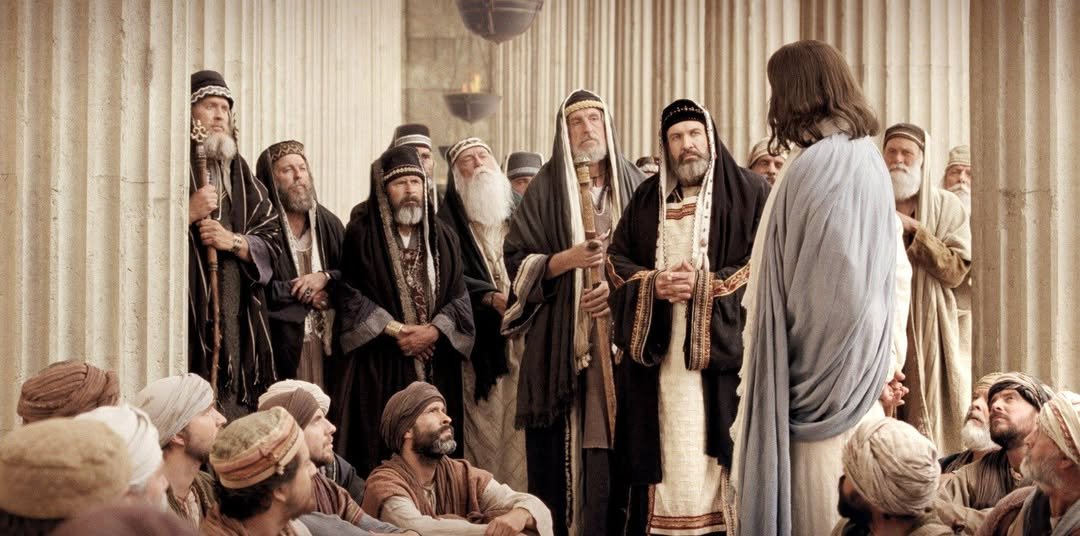

(One Lives by Works, the Other by Faith)
Under the law, people became far more aware of their sins. Sin was constantly set before their eyes. Many lived in fear of punishment or curses from judges and from God Himself for every misdeed. As a result, they felt compelled to obey the law without question—almost as though goodness was forced upon them.
Outwardly, they kept the rules, but inwardly their hearts often desired the very opposite.
This made them more guilty than before the law came. Before the law, who truly understood what sin was? The law defined sin clearly and exposed it. But does that mean the law itself is imperfect?
No. The law is perfect—it is holy and reflects God’s character. Yet because humans are imperfect, the law only magnified their flaws. It increased the awareness and therefore the power of sin in their sight. Sin abounded more visibly because of the law.
When you read the law, you see constant references to “uncleanness.” The clean were called righteous—but were their hearts truly clean?
People said things like, “Don’t touch me, for I am holier than you!”
How can any human dare claim to be holier than another?
The law is perfect, but humans are not. Under the law, hearts became more focused on sin than on righteousness. People performed righteous deeds not out of love or desire, but out of obligation—lest God punish them. The law felt like a prison.
In reality, God gave the law to reveal what is right, not primarily to punish. That’s why He provided a way of atonement through daily sacrifices.
But most Israelites never grasped this truth. The same is true for many religious people today. Their works come from the flesh, not from God.
It’s like paying tithes because you feel you must, while deep in your heart you resent it.
Is that faithful giving? Can it truly be counted as righteousness?
God looks at the heart, not merely the outward appearance.
If your outside looks clean but your inside is worse than a grave, aren’t you more guilty than unbelievers?
They at least live honestly according to what they are. But you—who claim to belong to God while your heart remains in the world—isn’t that pure hypocrisy?
Under Grace: Living by Faith
Those who live by faith in Jesus are made new creations from the inside out. The kingdom of God is within.
Faith produces works—not by human effort, but by the power of the Holy Spirit dwelling in us. We are simply vessels through which Christ does His handiwork.
Under grace, we become far more aware of righteousness than of sin.
We all know the principle: what you continually focus on and consume is what shapes you.
That is the key difference.
Under the law, people were constantly aware of sin.
Under grace, we are constantly aware of righteousness through Christ Jesus.
Jesus works within us to produce pure works of righteousness—works born of faith and orchestrated by the Spirit, never by our own strength.
In contrast, works under the law were produced by human effort alone.
Moreover, in Old Testament times, the Spirit of God was not given to all believers—so most people relied on their own strength to obey.
Can works done by human strength ever be true righteousness?
Imagine someone sacrificing a cow not because their heart desired to honor God, but purely because the law demanded it.
Was that act driven by faith or by fear of the law?
We, however, are saved by faith and have the Holy Spirit living within us—convicting, guiding, and empowering us continually.
How can works produced by mere human effort compare to works produced by the indwelling Spirit?
The body grows weary, ages, and dies.
But the Spirit never tires, never dies.
Under the law, sacrifices were offered by command, not from the heart.
Under grace, we believe and obey not by our own power, but because the Holy Spirit moves within us.
That is why we are able to do far greater and more numerous works.
As it is written: “The glory of this latter temple shall be greater than the former,” says the Lord of hosts. (Haggai 2:9)
He who lives by faith is greater than he who lives by the law.
One is born of the Spirit; the other is born of the flesh.
Jesus Himself declared:
“Truly I tell you, among those born of women there has not risen anyone greater than John the Baptist; yet he who is least in the kingdom of heaven is greater than he.” (Matthew 11:11 AMPC)
Moreover the law entered that the offense might abound. But where sin abounded, grace abounded much more. (Romans 5:20)
Light is far stronger than darkness.
So it is with those who believe in Christ Jesus our Lord and Savior.
Does this mean the law is imperfect?
No. The law perfectly reveals our shortcomings and sin, causing us to focus on failure rather than looking up to God.
The law is perfect, but man is not. Because we are born sinners, no one could ever fully keep the law without eventually failing.
If the law had remained the final standard to the end of time, no one would have survived—we are all sinners.
That is why God sent the Perfect One—Jesus.
He turned the tables. He fulfilled the law perfectly and became the new way.
We are now justified through Him by faith.
We are far more blessed than those under the law.
They lived under constant obligation to fulfill the law to stay in God’s favor.
We are set free by grace.

Jesus lived the perfect law on our behalf.
All we must do is believe in Him—the One who makes us righteous according to the law’s righteous demands.
This freedom is not a license to sin.
Grace does not abolish the law—it fulfills it.
Under grace, we are no longer slaves to sin or fear of punishment. (Understand more on Grace and salvation here…)
We are sons and daughters, led by the Spirit, living from a heart transformed by faith in Christ.
What did Christ really accomplish on the cross? Most teachers don’t give you you the full revelation of it fully… however today I made it available freely here