What is righteousness?
In the Greek, dikaios means to be innocent, just, and right before God.
Now ask yourself honestly: Who among us truly fulfills that—being fully right before a holy God?
Who can claim they’ve gone even one full day without a single sin?
If you, I, or anyone else cannot last 24 hours without sinning in thought, word, or deed, then how can any of us dare claim to be holier than another?
As Scripture declares:
There is none righteous, no, not one; there is none who understands; there is none who seeks God. They have all turned aside; they have together become unprofitable; there is none who does good, no, not one. (Romans 3:10-12 NKJV)
Let me pause with a direct question—and be completely truthful in your heart:
Do you seek God because you love Him for who He is, or because you expect something from Him?
_________________________________________________________________
Whatever your honest answer reveals, it shows where your heart truly stands before God.
For all have sinned and fall short of the glory of God… (Romans 3:23 NKJV)
And remember:
For whoever shall keep the law, and yet stumble in one point, he is guilty of all. (James 2:10 NKJV)
The law is one indivisible whole—because God Himself is one.
If you keep 99% perfectly but fail in even one small area, you have broken the entire law.
Offending God in one part is offending Him altogether.
That means the person who commits adultery and the person who steals a single dollar from a checkout machine have both sinned—violating the same holy law, just in different ways.
Before God, all sin carries the same weight: it separates us from His perfect glory.
The old covenant was based on works—perfect obedience to the law.
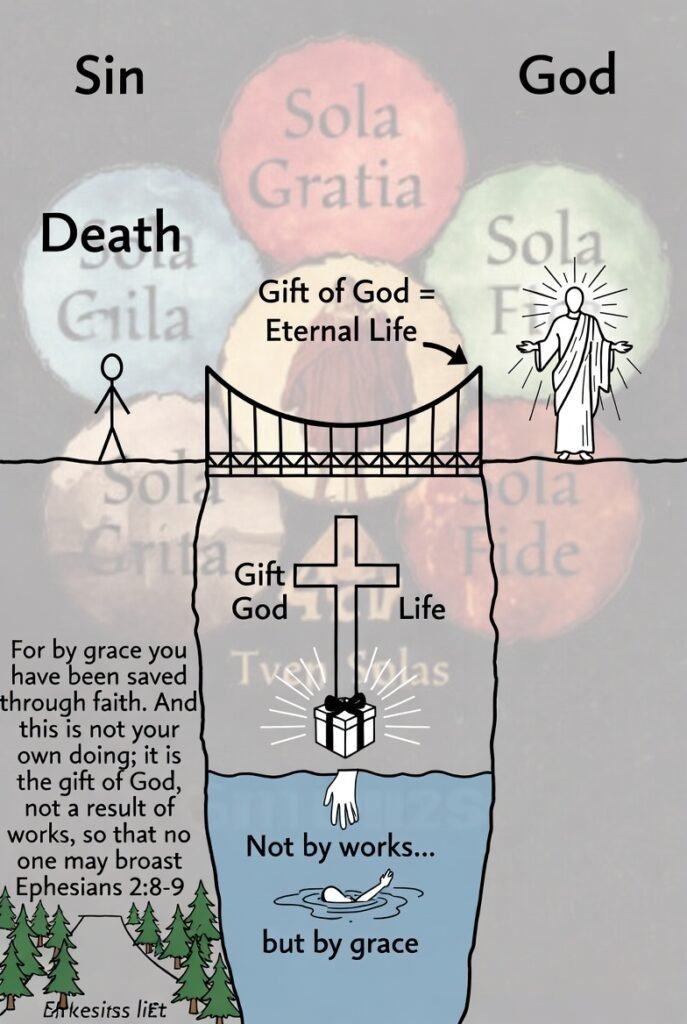
The new covenant in Jesus is based on faith, which makes grace available freely.
For what does Scripture say? “Abraham believed God, and it was accounted to him for righteousness.” Now to him who works, the wages are not counted as grace but as debt. (Romans 4:3-4 NKJV)
If righteousness could be earned by works, it would no longer be a gift—it would be a wage, something owed. Grace would cease to be grace.
Does this mean works make you unrighteous? No.
It means true righteousness comes by faith, and the Holy Spirit does the real work in us—not our own strength.
When the people asked Jesus,
Then they said to Him, “What shall we do, that we may work the works of God?” Jesus answered and said to them, “This is the work of God, that you believe in Him whom He sent.” (John 6:28-29 NKJV)
The foundational “work” God requires is believing in Jesus.
From that faith, the Holy Spirit begins producing real righteousness within us.
We have all fallen short. We have all sinned.
How then can fallen human effort possibly work out our own salvation?
Our flesh is in constant conflict with the Spirit.
How many times have you resolved to do good, only to feel something inside pulling the other way?
Imagine someone provokes you for no reason—picks on you out of nowhere.
One voice reminds you: “Love your neighbor as yourself.”
Another boils up: “Let me teach this person a lesson today.”
Forgiveness vs. retaliation.
Which one wins in your heart?
Even if you walk away and avoid the fight on the outside, does a lingering grudge in your heart make the outward act truly righteous?
Can light and darkness truly coexist in the same heart?
Even the apostle Paul openly struggled with this inner war:
We know that the law is spiritual; but I am unspiritual, sold as a slave to sin. I do not understand what I do. For what I want to do I do not do, but what I hate I do… For I know that good itself does not dwell in me, that is, in my sinful nature. For I have the desire to do what is good, but I cannot carry it out. For I do not do the good I want to do, but the evil I do not want to do—this I keep on doing… So I find this law at work: Although I want to do good, evil is right there with me. (Romans 7:14-21 NKJV)
Light cannot fellowship with darkness, yet our fallen nature—through Adam—binds us to sin and death.
If simply being human makes us liable to sin, how can we ever claim inherent righteousness?
Who then can receive true salvation?
Only the one who believes in Him whom God sent.
We are justified by faith—not by works.
But is faith without works alive?
No—faith without works is dead.
…show me your faith without your works, and I will show you my faith by my works. (James 2:18 NKJV)
You see then that a man is justified by works, and not by faith only. (James 2:24 NKJV)
Faith and works do not contradict—they complement each other.
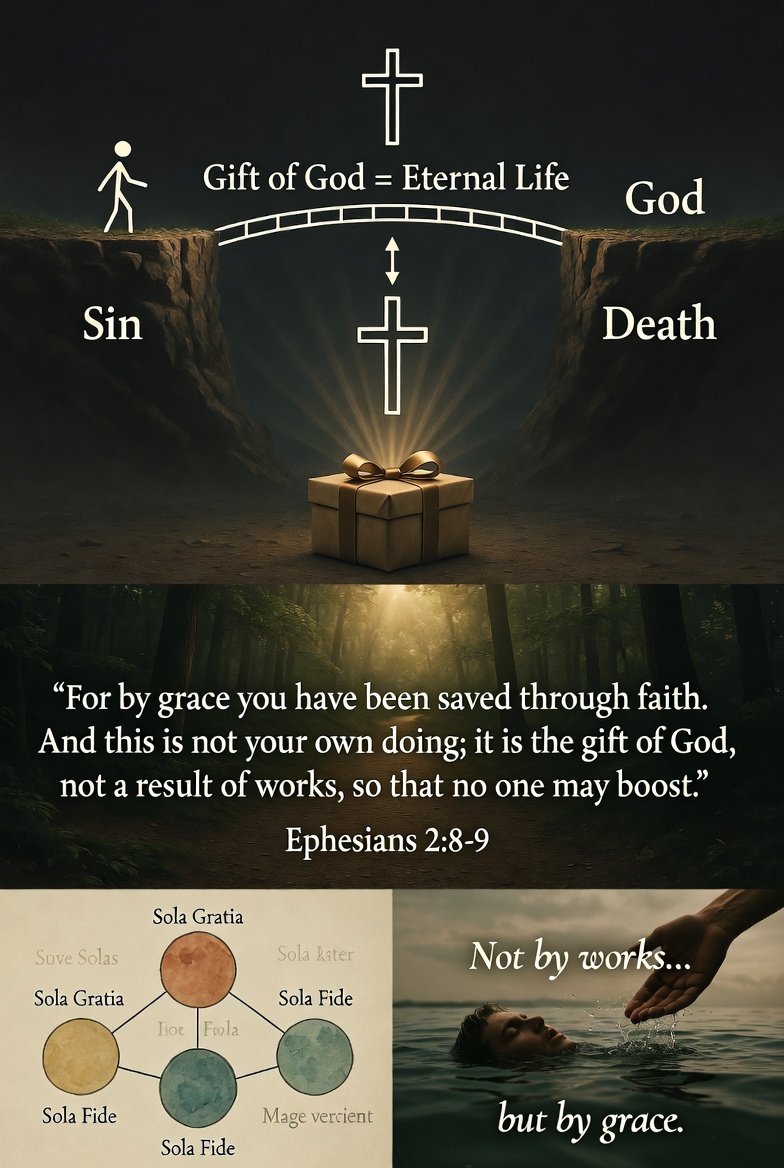
Paul emphasizes: salvation is by grace through faith alone, not earned by works (lest anyone boast).
James emphasizes: genuine saving faith is never alone; it inevitably produces fruit as evidence of life within.
If your faith is truly in Christ, over time it will manifest works—not by your own willpower, but by the power of the Holy Spirit working in you.
How else will anyone know you have living faith in Christ if no fruit appears?
By their fruits you shall know them.
James concludes:
For as the body without the spirit is dead, so faith without works is dead also. (James 2:26 NKJV)
Salvation is impossible by human effort.
But through faith in Jesus, the Holy Spirit empowers us to live righteously—not to earn salvation, but because we have already received it as a free gift.
Stand in that grace.
Believe in the One He sent.
Let the Spirit produce the fruit.
And watch true righteousness—not self-made, but God-given—begin to show in your life.
Lets dive more into why James without works is dead…here.