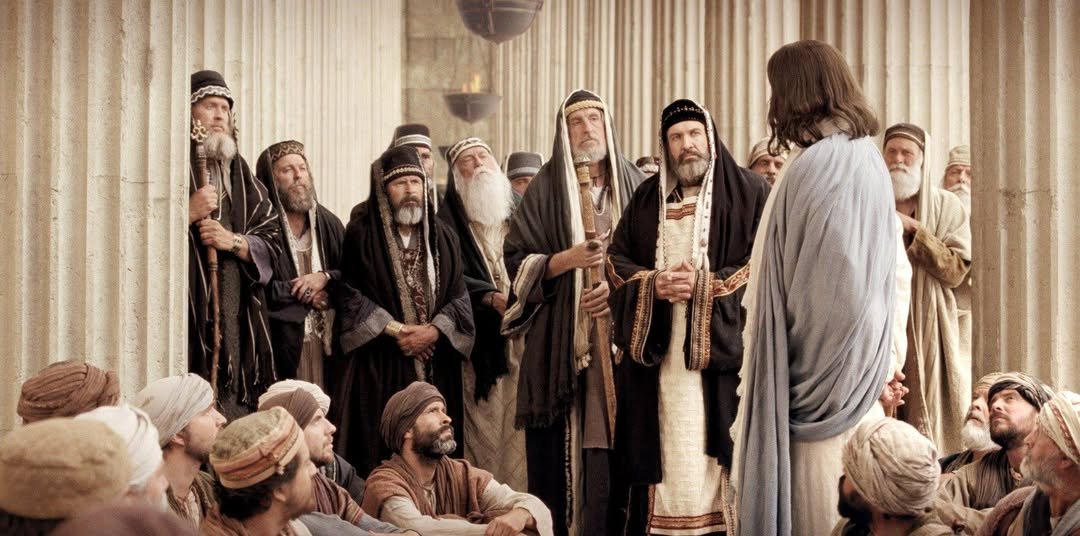

A Trap Set for Jesus
The famous dilemma is seen when Christ is tested by the Pharisees on whether it is lawful to pay taxes. The full context is in Matthew 22:15–22 (NKJV):
Then the Pharisees went and plotted how they might entangle Him in His talk. 16 And they sent to Him their disciples with the Herodians, saying, “Teacher, we know that You are true, and teach the way of God in truth; nor do You care about anyone, for You do not regard the person of men. 17 Tell us, therefore, what do You think? Is it lawful to pay taxes to Caesar, or not?” 18 But Jesus perceived their wickedness, and said, “Why do you test Me, you hypocrites? 19 Show Me the tax money.”
So they brought Him a denarius.
20 And He said to them, “Whose image and inscription is this?” 21 They said to Him, “Caesar’s.” And He said to them, “Render therefore to Caesar the things that are Caesar’s, and to God the things that are God’s.” 22 When they had heard these words, they marveled, and left Him and went their way.
If you reread the last three verses, you get a whole different impression. Strangely, many believers fail to comprehend what this whole scene was all about. What was it trying to teach?
A Lesson in Balance

From a tax perspective, Jesus was showing us something important yet commonly misunderstood: the relevance of maintaining a balanced life. We should not focus only on the spiritual and neglect the physical. Hoping some random miracle will happen and all our money problems will disappear without our working hard to eliminate them. That is why He said, render to Caesar what belongs to him, and to Me what is Mine.
In trying to make your life better—whether financially, in your career, or even in your health—do not abandon nourishing your Christian life. The physical is as important as the spiritual, because these aspects depend on each other.
Consider a Christian who is poor. As much as he may wish to give more in the offering, he is not in a position to do so. Consider also a very rich believer who spends over a hundred hours a week working and only prays for about five minutes before going to bed, if he is persistent. In his riches, he has a staggering relationship with Christ.
Self-Regulation and Honest Work
Going back to Caesar and the tax, Christ was trying to bring out the importance of self-regulation. As much as you want success and riches, these will not really satisfy your soul. Neither does spending over five days in church automatically make your life better. If you are praying to God for a better life, you have to go and work hard to afford it.
Mind you, there is not a single place—and I repeat, not a single time—where God ever says, “I will give you money if you pray to Me.” Yet we have Christians who assume so by the way they tend to over-spiritualize everything. They somewhat think that is how God works. No.
God gives you strength to make wealth; He does not actually give you the wealth overnight. Even when you look at Israel, a country promised milk and honey, it did not just wake up in the middle of Canaan. They had to fight, fight, and fight until they took a portion of what God promised them. God gave them the strength, and they went and fought for what was theirs.
This is how every Christian should be. Yet many miss it.